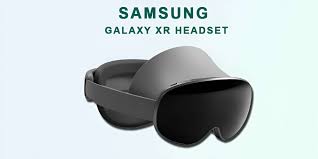
Samsung Galaxy XR, In a world drowning in incrementally better smartphones and tablets, something truly disruptive is finally peeking over the horizon. Samsung, the titan of global tech, hasn’t just released a gadget; they’ve unveiled a potential platform shift with the Samsung Galaxy XR.
This isn’t just about watching 360-degree videos; this is about blending digital life seamlessly with the physical world—a mixed-reality (MR) experience designed to make the term “extended reality” (XR) an everyday reality.
Samsung is betting big, collaborating with Google for the software backbone (Android XR) and Qualcomm for the raw power. But here’s the million-dollar question: Can this new XR headset 2025 entrant avoid the pitfalls that tripped up other major players (yes, we’re looking at you, Apple Vision Pro)?
Let’s peel back the layers on the Galaxy XR and figure out if this is truly the future we’ve been waiting for.
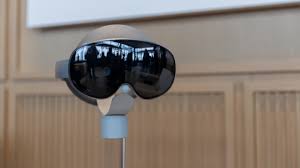
🌐 Beyond VR: What Exactly Is the Samsung Galaxy XR?
For years, Virtual Reality (VR) felt like a niche hobby—clunky goggles for gamers. Augmented Reality (AR) was cool but mostly confined to your phone screen (think Pokémon Go).
The Samsung Galaxy XR changes the narrative entirely.
This device is Samsung’s official, full-throttle leap into the XR space. It’s a Mixed Reality device, meaning it doesn’t just block out the world (VR) or overlay minimal graphics (AR). Instead, it uses advanced cameras (passthrough technology) to feed the real world into the headset displays, allowing virtual elements to interact convincingly with your actual furniture, colleagues, or coffee table.
Imagine turning your ordinary office desk into a virtual command center with five floating monitors, or holding a meeting where your coworker in London appears as a lifelike, three-dimensional hologram right next to your potted plant. That’s the core promise of the Galaxy XR.
And the best part? It’s built on Android XR. This isn’t a proprietary, locked-down system. It’s an open-source framework backed by Google, immediately giving developers the freedom to build amazing things without seeking permission from a gatekeeper.
⚙️ Galaxy XR Features: The Hardware That Means Business
When talking about any headset, the specs aren’t just numbers; they dictate the experience. The Galaxy XR features list reads like a dream sheet for immersive computing.
1. Raw Power: The Engine Under the Hood
At its core sits the Qualcomm Snapdragon XR2+ Gen 2. This isn’t just a slightly faster chip; it’s specifically optimized for high-resolution XR workloads. Why does this matter? It handles the immense pressure of simultaneously processing real-world passthrough video and rendering complex virtual environments in real-time. Without this powerhouse, you get lag, motion sickness, and low-quality graphics. Samsung ensures buttery-smooth performance, vital for long-term comfort.
2. The Visual Feast: Micro-OLED Displays
The display technology is arguably the most crucial feature. The Galaxy XR utilizes Dual micro-OLED panels, offering a massive 3,552 × 3,840 resolution per eye. We’re talking about roughly 27 million total pixels.
What is micro-OLED and why should you care? It allows for ultra-high pixel density in a tiny space, resulting in visuals that are incredibly sharp, bright, and vibrant. It dramatically reduces the dreaded “screen-door effect” (where you can see the tiny lines between pixels), making the virtual world feel genuinely continuous and real.
3. Seamless Interaction: Tracking and Controls
The days of chunky handheld controllers are over—at least, they’re optional. The Galaxy XR boasts advanced full hand-tracking, eye-tracking (via four internal cameras), and voice control. This level of input precision allows users to interact naturally: selecting items by simply looking at them, pinching fingers to click, or using voice commands to manage applications.
4. The Look and Feel: Design and Comfort
Samsung clearly learned from others’ mistakes. They prioritized wearability. Tipping the scales at only around 545g, the Galaxy XR is notably lighter than its main competitor. Combined with a wide Field of View (FoV) of 109° horizontal and 100° vertical, the experience is less like looking through binoculars and more like simply wearing oversized glasses. This focus on ergonomics means less strain during extended work or gaming sessions.
Quick Stats Snapshot:
| Feature | Detail | Impact on User |
|---|---|---|
| Processor | Snapdragon XR2+ Gen 2 | Zero lag, hyper-realistic graphics. |
| Display | Dual Micro-OLED (27M pixels) | Crystal clarity; no visible screen door effect. |
| Weight | ~545g | Comfortable for extended use. |
| FoV | 109° H / 100° V | Immersive, wide-angle viewing experience. |
| Battery | ~2.5 hours (video playback) | Acceptable, but necessitates the clever external battery system. |
💰 Galaxy XR Price in Pakistan: An Investment in the Future
Let’s address the elephant in the room: the cost.
The official U.S. price tag sits at $1,799. Given the persistent challenges with import duties, taxes, and currency devaluation, the Galaxy XR price in Pakistan is expected to be steep. We are looking at an estimated retail price fluctuating between PKR 650,000–700,000.
Yes, that figure is massive for the average consumer. It places the device squarely in the realm of luxury tech or, more accurately, professional equipment.
However, context matters. Compared to Apple’s alternative, which launches north of $3,500, the Galaxy XR is nearly half the price while often matching or exceeding key technical specifications. For companies, software developers, architects, and educational institutions in Pakistan looking to invest in cutting-edge tools, the Galaxy XR offers undeniable value. It democratizes premium XR access, making high-fidelity mixed reality possible without requiring the astronomical budget of the competition.
🧠 Samsung’s Vision: Building a True Platform with Android XR
Samsung isn’t just selling hardware; they are establishing an ecosystem.
Their partnership with Google’s Android XR platform is the strategic masterstroke here. Apple’s Vision Pro, while technically brilliant, operates in a tightly controlled ecosystem. This can stifle creativity and slow down the growth of the content library.
Android, on the other hand, is inherently open. This means that thousands of global developers—including those in Pakistan—can easily port existing Android apps or build entirely new, revolutionary XR experiences. This open approach guarantees a faster explosion of content, tools, and productivity applications compared to any competitor relying solely on its own walled garden.
Samsung understands that hardware is just the vehicle; the software and the developer community are the fuel. This move signals a commitment not just to launch a product, but to define the entire next phase of computing.
⚡ Pros and Cons: A Quick, Honest Look
No device is perfect, especially in a nascent category like XR. Here’s a balanced breakdown:
Pros
- Affordable Premium: Almost 50% cheaper than the main competition while retaining top-tier specs.
- Android XR Advantage: A thriving, open app ecosystem is guaranteed to grow fast.
- Superior Comfort: Lighter weight (545g) and smart design mean less neck strain during long use.
- External Battery Swap: You can easily swap out the external battery pack, solving the endurance problem instantly.
- Natural Interaction: Stellar eye and hand tracking powered by advanced AI makes controls intuitive.
Cons
- Initial App Library: Although growing rapidly, the specific Android XR library is still starting out.
- High Price (Globally): Still expensive for the general masses, especially in countries with high import taxes like Pakistan.
- Battery Life: The internal battery life of 2.5 hours is decent for this tech, but still far from an all-day device (though the external pack helps).
🤔 Will It Fail Like the Apple Vision Pro? (Spoiler: Probably Not)
This comparison is unavoidable. The Apple Vision Pro received massive initial fanfare but has struggled to find a solid mainstream audience due to its astronomical price and complex control scheme, often relying on cumbersome gestures.
The Galaxy XR is strategically positioned to succeed where the Vision Pro stumbled, and the difference lies almost entirely in user experience and accessibility.
1. The Accessibility Gap: Price is Everything
We’ve hammered on the price, but it’s the single biggest differentiator. $1,799 is a serious purchase, but it falls within the realm of high-end laptops or professional cameras. $3,500 is simply inaccessible for 99% of the global population. By being significantly cheaper, Samsung immediately opens the door to developers, small businesses, and keen tech enthusiasts.
2. Ecosystem Power: Android is Global
Apple’s platform is brilliant, but exclusive. Android is ubiquitous. The moment Android XR takes off, developers don’t have to learn a new language or invest in entirely new hardware; they can leverage existing skills. This speed of adoption is crucial for building out the necessary killer applications that turn a gadget into an essential tool.
3. Smart Design and Ergonomics
Samsung’s focus on ergonomics is key to mainstream success. The Vision Pro is heavy and often causes fatigue. Furthermore, its battery is tethered and non-swappable during use. Samsung’s external, swappable battery pack is a stroke of genius, allowing professionals to work for hours on end by simply clicking in a fresh unit. Comfort and continuous use are non-negotiables for enterprise adoption.
4. AI Integration: Making XR Smarter
By integrating Samsung’s existing Galaxy AI features and leveraging Google’s Gemini AI, the Galaxy XR isn’t just reacting to your movements; it’s anticipating them. AI assists in gesture prediction, voice recognition accuracy, and optimizing the display rendering in real-time. This reduces cognitive load and makes the interface feel genuinely intelligent and natural, a critical step towards seamless interaction.
Meta’s Ray-Ban Display Glasses could be a revolutionary step in smart eyewear. If you haven’t read about them yet, check out my detailed post here.
📈 How Samsung Can Win the XR Game
To truly dominate, Samsung needs to look beyond the initial launch.
- Galaxy Ecosystem Synergy: Samsung must ensure the Galaxy XR integrates perfectly with existing Galaxy devices. Imagine using your Galaxy S phone as a touch controller, receiving notifications on your Galaxy Watch in VR, or seamlessly syncing cloud data between the headset and your tablet. This deep integration rewards loyal Samsung users.
- Affordable Entry Points: Following the successful strategy of their smartphones, Samsung should introduce a “Galaxy XR Lite” version within a year or two—perhaps dropping the Micro-OLED for high-end QLED, bringing the price down to $999. This targets the student and mass-market consumer quickly.
- Localized Marketing and Demos: For markets like Pakistan, immersive demo experiences are vital. People need to feel what it’s like to work or play in mixed reality before shelling out half a million rupees. Setting up experience zones in major retail centers will build confidence and enthusiasm.
To learn more about Samsung Galaxy XR, visit Samsung’s official website.
🇵🇰 Galaxy XR and the Pakistani Digital Economy
The high Galaxy XR price in Pakistan might seem prohibitive, but the long-term potential for specialized sectors cannot be overstated.
In Pakistani architecture firms, the ability to walk through a design with clients in full 3D space will revolutionize presentations. Medical students can practice complex surgical procedures in a virtual lab without risk. Educators can take students on virtual field trips to ancient Rome or the surface of Mars.
For the burgeoning Pakistani IT sector, the Galaxy XR presents an opportunity to leapfrog competitors. Local developers can tap into the global Android XR market, creating localized content, training modules, and productivity tools specifically for the subcontinent. While the initial investment is high, the return—in terms of innovation, job creation, and skill development—is massive.
🏁 Final Verdict: The Future is Mixed, and It’s Wearing Samsung
The Samsung Galaxy XR is more than just the latest piece of premium tech; it’s a confident declaration of intent. It takes everything the industry has learned about VR and AR, strips away the cumbersome elements, and presents a comprehensive, powerful, and (relatively) accessible alternative to the current market leader.
By prioritizing comfort, leveraging the open nature of Android XR, and strategically pricing their product, Samsung isn’t just competing with Apple—it’s aiming to define the entire category for the next decade.
If you’ve been skeptical about XR headsets up until now, that’s fair. But the Galaxy XR is the first device that genuinely feels capable of graduating extended reality from “niche novelty” to “essential computing tool.” The future of blended digital and real-world experiences is here, and it looks like Samsung is holding the remote. The clock is ticking toward the XR headset 2025 benchmark, and the Galaxy XR is setting the pace.