et’s be honest for a second: everyone and their dog thinks they can become a millionaire overnight by posting 15-second clips of their lunch or a random street cat. And while I love a good cat video as much as the next guy, the “get rich quick” era of YouTube Shorts is basically over. But here’s the good news—the “build a real business” era is just getting started.
If you’re tired of seeing the “0.01 cents in my wallet” notification on YouTube Studio, stick around. We aren’t talking about vague motivation today; we are talking about the actual, nitty-gritty mechanics of how to turn those short vertical clips into a serious paycheck in 2025. It’s harder than it was in 2023, sure, but the payoff for those who stick with it is massive.
The Big Shift: Why the Old “Shorts Fund” is Dead
Remember the YouTube Shorts Fund? That $100 million pot they threw at creators back in the day? Yeah, that’s gone. Or at least, it’s not the main player anymore.
Personally, I think the switch was the best thing that happened to creators. Why? Because the Fund was capped. You hit a limit, and YouTube essentially said, “Good job, here’s your pocket money, now go away.”
In 2025, we are playing by YouTube Partner Program (YPP) rules. This changes everything. Instead of a bonus bucket, you get a cut of the actual ad revenue. This means your income potential is uncapped. If a video goes absolutely nuclear, you get paid like it went nuclear. You aren’t fighting for a slice of a fixed pie; you’re baking a new pie every single month.
Step 1: The “Gatekeeper” Requirements (And How to Beat Them)
Before you see a single dime, you have to get through the gate. The requirements for 2025 are strict, but fair:
- 1,000 Subscribers
- 10 Million Shorts Views (in the last 90 days)
That “10 million views” number scares a lot of people off. I get it. It sounds huge. But here’s a little secret I’ve noticed: the algorithm counts accumulated views. You don’t need one video to get 10 million. You need fifty videos to get 200k. Or a hundred videos to get 100k.
If you are posting consistently—like, actually consistent, not “I posted three times this week and gave up”—you can hit 10 million views in a few months. Once you cross that line, you plug your channel into the revenue engine.
Revenue Sharing Model:
Just so we are clear on the math (since I know people will ask): Creators keep 45% of the ad revenue generated from their Shorts. YouTube takes the rest to cover the music licensing and platform costs. It might sound like you’re losing half, but remember, these are ads you didn’t have to sell yourself.
Step 2: Picking a “Money” Niche (Not Just a “Views” Niche)
This is where most people mess up. They pick a niche that gets views but has zero monetization potential.
- Bad for Money: Meme compilations, funny street fights (that get demonetized anyway), or random scenic videos.
- Good for Money: Tech, Finance, Business Software, Real Estate, Health & Fitness.
Why? Because advertisers pay more to reach someone interested in “Credit Cards” than someone interested in “Funny Fails.” This is what we call CPM (Cost Per Mille).
If you want to make real money, you need to align your content with high-value advertisers.
I’ve used every strategy under the sun, and here is what works best right now:
- Tech & AI: Reviewing the latest gadgets or AI tools. The tech audience is hungry, and tech advertisers have deep pockets.
- Finance/Crypto: Still huge. Explaining how credit cards work or investment strategies.
- Digital Products: Teaching people skills like Excel, coding, or video editing.
If your niche is “lifestyle vlogging,” you can still make money, but you’re going to rely heavily on sponsorships rather than just ad revenue.
For more detailed tips on creating high-performing YouTube shorts, check out our guide: How to Make Engaging YouTube shorts That Get Views
Step 3: The “Algorithm Whisperer” Strategy for 2026
Okay, you have your niche. Now, how do we get the views to trigger the money?
The 2026 algorithm is all about retention loops. It’s not enough for someone to watch your video; they need to watch it twice, or three times.
The Hook is Everything:
I’ve analyzed hundreds of my own videos, and honestly, if I don’t hook them in the first 1.5 seconds, I’m dead.
- Bad Hook: “Hey guys, welcome back to my tech channel.”
- Good Hook: “Stop deleting your photos! This iPhone setting is stealing your storage.”
Notice the difference? The second one creates a “fear of missing out” (FOMO). It stops the scroll.
The Pattern Interrupt:
This sounds technical, but it’s simple. Don’t let the screen stay static.
- Zoom in.
- Zoom out.
- Add a sound effect.
- Cut to a B-roll shot.
I’ve noticed that if I keep the visual changing every 2 seconds, my retention graph stays flat (which is good—it means people aren’t leaving). If I talk to the camera for 10 seconds straight? Drop-off cliff.
The Loop:
End your video in a way that blends into the beginning. If you start with a question and end with the answer, people might rewatch it to catch the setup again. 200% retention is the magic number for virality in 2025.
Step 4: Beyond Ad Revenue (The Real Money)
Here is a truth bomb: Ad revenue on Shorts is relatively low.
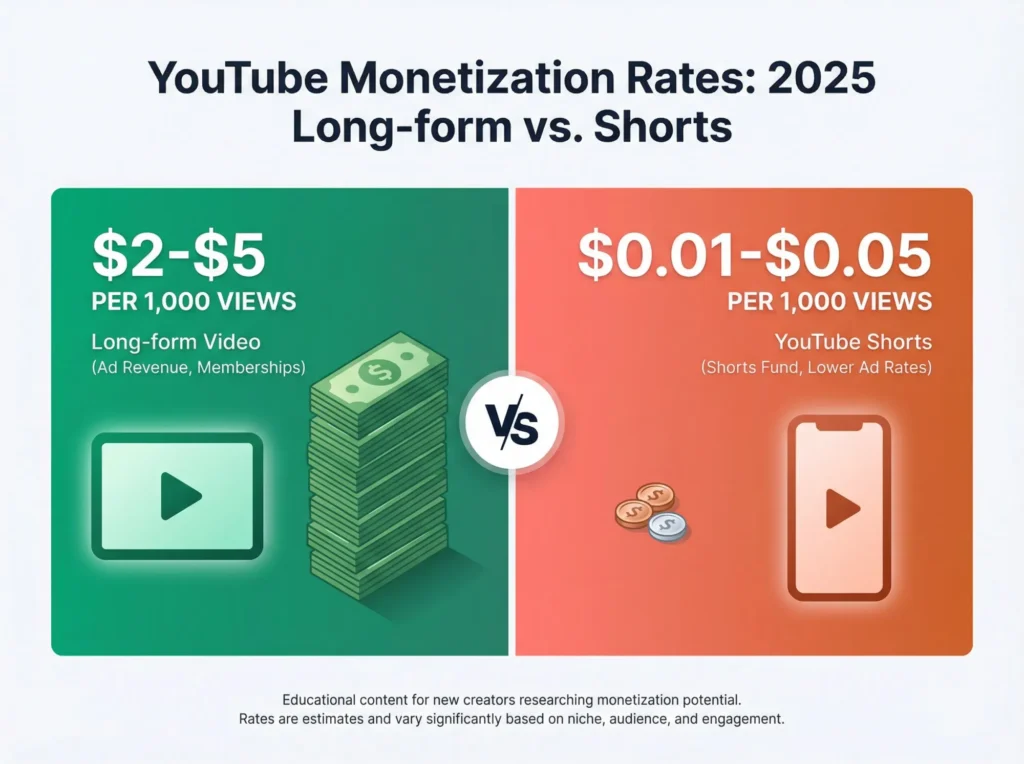
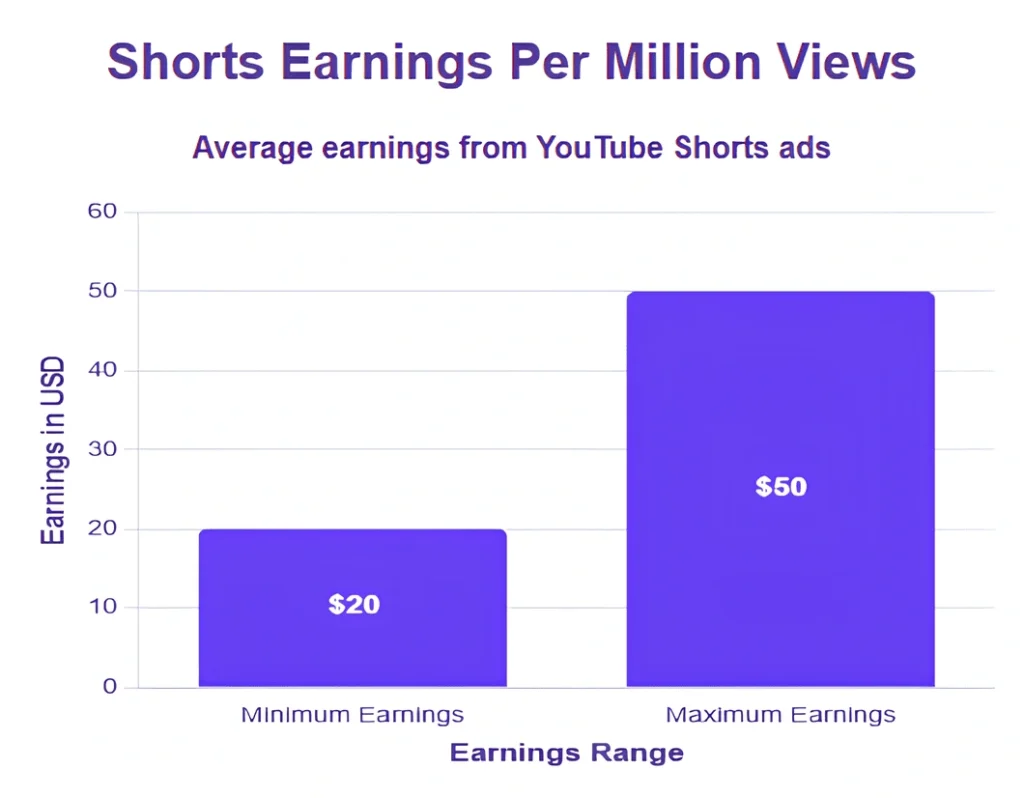
We are talking pennies per 1,000 views. Maybe $0.01 to $0.06 depending on the country. To make a living wage just from ad revenue, you need tens of millions of views every single month. That’s burnout territory.
To actually make a living, you need to use Shorts as a funnel, not the destination.
1. Affiliate Marketing (The Silent Assassin)
This is my favorite method for beginners. You don’t need a sponsor. You find a product, get a link, and put it in your pinned comment.
- Example: A Short about “Top 3 Gadgets for Your Desk.” Show the gadgets. Put the Amazon link in the comments.
- Why it works: The impulse buy on TikTok and Shorts is real. People see a cool $20 gadget, they click, they buy. You get 5%.
2. Selling Your Own Stuff (Digital Products)
I’ve seen creators with only 5,000 subscribers make more than creators with 500k because they sell their own products.
- Are you a fitness coach? Sell a $30 “Home Workout Plan.”
- Are you a designer? Sell “Notion Templates.”
- Are you a gamer? Sell a “Guide to Ranking Up.”
You make the product once, and it sells forever while you sleep. That’s how you escape the “content mill” hamster wheel.
3. Sponsorships
Once you hit that 100k subscriber mark, brands will start sliding into your DMs.
- Apps: VPNs, Mobile Games, AI Writing tools.
- Physical Products: Energy drinks, clothing, headphones.
A sponsored post on a decent-sized channel can pay anywhere from $500 to $5,000 per video. That’s way more than ad revenue will ever pay you.
Step 5: Realistic Earnings (No Cap)
Let’s look at some numbers, keeping in mind that these vary wildly by niche. A “Finance” channel earns way more than a “Gaming” channel.
- 100k Views: You might see $2–$10 from ads. It sounds depressing, right? But if you plugged an affiliate link in there and sold 10 products at $10 commission each? You just made $100.
- 1 Million Views: This is the milestone. Ads might pay you $100–$500. This is where sponsorship deals usually start knocking.
- 10 Million Views: Now we’re talking. $1,000–$5,000 from ads. Plus, you are now an “influencer.” You can launch a course, a merch line, or a high-ticket coaching program.
The “Viral Tax”:
I’ve learned the hard way that not all views are equal. Views from the US, UK, and Canada pay 10x more than views from India or the Philippines. It’s just the economics of advertising. If you target the US audience, your RPM (Revenue Per Mille) goes up.
Step 6: The “Grind” – Tools and Workflow
Making money requires volume. You can’t post once a week and hope for the best. The algorithm in 2025 rewards consistency.
My Recommended Tech Stack:
- Filming: Just use your phone. The new iPhones or Samsungs are overkill for vertical video. I’ve shot viral shorts on an iPhone 11 that looked better than 4K camera footage because the lighting was good.
- Editing: CapCut is the king here. It’s free and it has all the auto-captions and trend sounds built-in. Premiere Pro is too slow for Shorts.
- Thumbnails: Yes, Shorts still need thumbnails if people are browsing your channel page. Make them pop!
Repurposing:
Don’t reinvent the wheel.
- Take a long-form video you made.
- Cut out the best 30 seconds.
- Add a “Hook” title overlay.
- Post it as a Short.
This feeds your Shorts views and drives traffic back to your long-form videos. It’s a double whammy of growth.
Step 7: Common Mistakes (Don’t Be This Guy)
I see so many talented creators fail because they ignore the basics. Honestly, most people won’t notice these mistakes until it’s too late.
1. Ignoring the “Search” Factor
Most people think Shorts are only for the “Feed.” But people search for Shorts too.
- Bad Title: “Look at this!”
- Good Title: “How to fix iOS 18 Battery Drain (2025)”
Use keywords in your title and description. YouTube transcribes your audio now. If you say “iPhone 18 Pro Max camera leaks” in the video, and type it in the description, you will show up when people search for it. This is long-term traffic that doesn’t disappear after 48 hours.
2. Buying Views
Please don’t do this. It’s tempting. You see services offering “10,000 views for $5.” But will it really matter for most users? No, because YouTube’s AI is smarter than that. It detects bot traffic and flags your channel. Once you are flagged, you go into “Shadowban Jail” and it is nearly impossible to get out.
3. Inconsistent Branding
One day you’re posting about cooking, the next day about crypto, the next day about dancing.
The algorithm gets confused. If YouTube doesn’t know who you are, they can’t show you to the right people. Pick a lane. Stay in it for 6 months.
Final Thoughts: Is It Worth It?
We covered a lot of ground. The requirements, the ad revenue share, the affiliate marketing, and the brutal reality of the algorithm.
So, is YouTube Shorts a viable income source in 2025?
Absolutely.
But it’s not a lottery ticket. You can’t just buy a ticket and win. You have to treat it like a job.
If you’re willing to:
- Post daily (or at least 3-4 times a week).
- Study your analytics (find where people are swiping away and fix it).
- Diversify your income (don’t rely 100% on AdSense).
…then you can build something incredible.
The landscape is shifting. Apple’s AI won’t wow you like Android phones might, but in real life, the ecosystem just works. The same goes for Shorts. It might not have the “cool factor” of TikTok anymore, but the monetization ecosystem on YouTube is unmatched anywhere else on the internet.
Start today. Film that hook. Post that Short. The “waiting for the perfect time” is just fear in disguise. The algorithm is waiting for you.
Pingback: How to Make Money with AI in 2026 - alfawaz.tech
Pingback: AI Tools That Earn Me Money Every Single Day - alfawaz.tech
Pingback: Your YouTube Shorts Aren’t Dead — The Algorithm Changed (2026) - alfawaz.tech