Look, I’ve been following iPhone leaks for years now, and honestly? The iPhone 17e might just be the phone most of us actually need. Forget the fancy Pro models for a second. We’re talking about a device that could genuinely last two days on a single charge while costing significantly less. In Pakistan especially, where we deal with constant load-shedding and need phones that just work without drama, this matters more than any 120Hz display ever will. The battery and performance leaks coming out right now suggest Apple finally gets it—not everyone wants to drop 400,000 rupees on a phone.
Why I’m Actually Excited About This “Cheap” iPhone
Here’s the thing. I’ve watched Apple release “budget” iPhones before. The SE models were okay, sure, but they always felt like compromises. You’d get decent performance but terrible battery life. Or good battery but an ancient design. The iPhone 17e leaks? They’re different.
This time around, Apple seems to be building something that doesn’t feel second-tier. And for markets like ours in Pakistan, that’s huge.
iPhone 17e Battery Leaks: The Numbers Don’t Tell the Full Story
So the rumored battery capacity sits somewhere between 3,500 and 3,700 mAh. I know what you’re thinking—my friend’s Android has 5,000 mAh! Why would I settle for less?
But here’s what most people miss. Battery capacity is just one piece of the puzzle. It’s like judging a car only by fuel tank size without considering mileage. Apple’s always been better at optimization than raw numbers.
The 60Hz Display Actually Helps Here
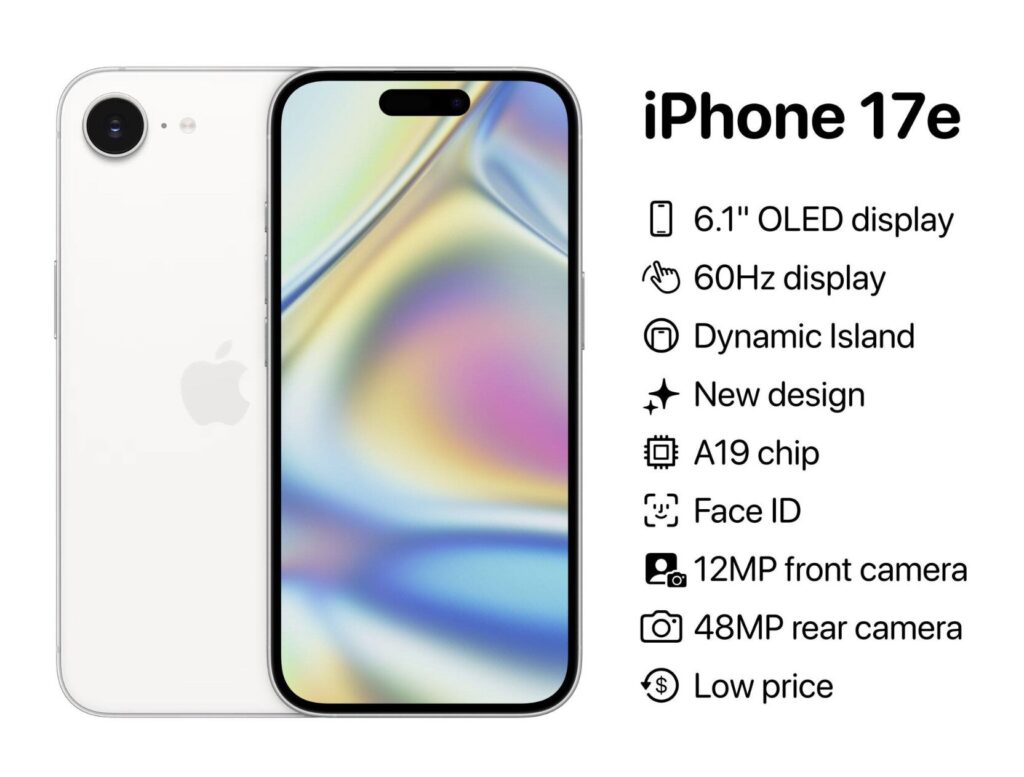
Personally, I think the decision to stick with 60Hz refresh rate was smart. Yeah, 120Hz looks smoother when you’re scrolling Instagram. I won’t lie about that. But does it matter enough to sacrifice hours of battery life? For most users, absolutely not.
That 60Hz OLED panel in the iPhone 17e is going to sip power instead of chugging it. ProMotion displays are beautiful, don’t get me wrong. I’ve used every iPhone since the 12 Pro, and yes, 120Hz is nice. But when my phone dies at 6 PM because I forgot my power bank? That smoothness doesn’t seem worth it anymore.
The OLED technology itself is efficient. Much better than the LCD panels Apple used to throw into their budget phones. So you’re getting deep blacks, good contrast, and decent battery life. That’s the sweet spot.
A19 Bionic Chip: The Real Battery Hero
This is where things get interesting. The A19 Bionic chip expected in the iPhone 17e is built on a 3nm process. What does that actually mean for regular people?
Basically, the chip does more work while using less electricity. It’s like having an employee who’s both faster and doesn’t need as many coffee breaks. The efficiency gains from 3nm manufacturing are real, not just marketing talk.
I’ve read early reports suggesting light users could push this phone to two full days. Now, I’m skeptical by nature. Apple’s “all-day battery life” claims have burned us before. But if the A19 chip performs as efficiently as the leaks suggest, two-day battery life for moderate usage actually seems possible.
Think about it: checking WhatsApp, browsing social media, watching some YouTube, making calls. That’s most people’s daily routine. For that usage pattern, the iPhone 17e battery optimization could genuinely surprise people.
Battery Life in Pakistani Context—Why It Really Matters
Let me paint you a picture. You’re commuting from Gulberg to Saddar in Lahore. Traffic is brutal. You’re using Google Maps, listening to Spotify, and your friends won’t stop messaging in that group chat. Meanwhile, there’s been load-shedding in your area, so you couldn’t fully charge before leaving.
This is real life in Pakistan. This is where the iPhone 17e battery performance will actually be tested.
Heavy social media use? Check. Long screen-on time during commutes? Check. Unreliable charging opportunities? Double check.
Early leaks suggest even heavy users should comfortably get through a full day. And honestly, that’s all most people need. If you can leave home at 8 AM and not worry about finding a charger until you’re back at 10 PM, the phone’s done its job.
Charging: Finally Catching Up to Reality
Okay, can we talk about how Apple stubbornly stuck with Lightning for way too long? Ridiculous. But the iPhone 17e is finally moving to USB-C, and thank goodness for that.
25W Fast Charging—Is It Enough?
The rumored 25W charging speed isn’t industry-leading. Samsung and other Android manufacturers offer 45W, 65W, even faster options. But you know what? 25W is actually perfectly fine for most situations.
Reports suggest you’ll hit 50% charge in roughly 30 minutes. That’s enough for a quick top-up while you’re having breakfast or getting ready. You don’t need your phone to charge from 0 to 100 in 20 minutes. That’s just not a real-world scenario for most people.
Also, slower charging is actually better for long-term battery health. Those super-fast charging speeds generate more heat and degrade batteries faster. Apple’s more conservative approach might seem boring, but your battery will thank you three years from now.
MagSafe: Small Feature, Big Convenience
MagSafe compatibility continues with the iPhone 17e, which is great news. I honestly didn’t think much of MagSafe when it first launched. Seemed gimmicky. But after using it? It’s genuinely convenient.
Wireless charging at your desk. Car mounts that snap perfectly. Battery packs that attach magnetically. These small quality-of-life improvements add up over time.
iOS 26 Battery Management—The Invisible Helper
Apple’s battery optimization in iOS keeps getting smarter. iOS 26, which will ship with the iPhone 17e, learns your usage patterns over time. It knows when you typically charge, when you use your phone heavily, when you’re usually sleeping.
This behind-the-scenes optimization extends battery life without you doing anything. The phone just gets smarter about managing background processes, app refresh, and power consumption.
Will it magically double your battery life? No. But will it squeeze out an extra hour or two compared to less optimized systems? Absolutely.
iPhone 17e Performance: More Power Than You’ll Probably Use
The A19 Bionic chip in the iPhone 17e is the same processor expected in the standard iPhone 17. Read that again. The “budget” iPhone is getting the same brain as the regular model.
This is huge. This means you’re not compromising on performance just to save money.
For full details on iPhone 17e camera leaks and display features, check out our previous post here
What Does “Future-Proof” Actually Mean?
I know “future-proof” gets thrown around a lot in tech marketing. But with Apple’s chips, it actually means something concrete.
iPhones from 5-6 years ago still run the latest iOS reasonably well. That’s because Apple’s processors were powerful enough back then to handle today’s software. The A19 chip will be the same story.
Apps will get more demanding. iOS updates will add features. Games will require more processing power. The A19 can handle all of that, not just today but for years to come.
For Pakistani users especially, this matters. Most people here don’t upgrade phones every year or two. A phone needs to last 4-5 years minimum. The iPhone 17e performance should hold up throughout that entire period.
Everyday Performance—The Stuff That Actually Matters
Honestly, most people won’t push their phone’s processor to the limit. You’re not rendering 4K video on your phone. You’re not running professional-grade applications.
You’re browsing Instagram. Watching YouTube. Video calling on WhatsApp. Using Google Maps. Checking email. Scrolling through Twitter (or X, or whatever we’re calling it now).
For all of these everyday tasks, the iPhone 17e will be absolutely flawless. Zero lag. Instant app opening. Smooth scrolling. No stuttering.
But will it really matter for most users that the A19 Bionic has however many billion transistors? Probably not. What matters is that your phone doesn’t feel slow, and it won’t.
Gaming Performance—Surprisingly Capable
Now, if you’re into mobile gaming, here’s where the A19 chip really shines. Games like Genshin Impact, Call of Duty Mobile, Asphalt, PUBG—these will run at maximum settings without breaking a sweat.
I’m not a huge mobile gamer personally, but I’ve tested enough iPhones to know that Apple’s chips punch way above their weight in gaming performance. The GPU in the A19 should handle anything you throw at it.
Frame rates stay consistent. Graphics look crisp. Touch response is immediate. Even during long gaming sessions, performance doesn’t degrade.
iOS 26 and On-Device AI: Actually Useful Features
Apple’s approach to AI has been different from Android manufacturers. Less flashy, more practical. And honestly? I think that’s the right call for most users.
For the latest official updates and specs on the iPhone 17e, visit Apple’s official website
AI Features That Make Sense
The A19 chip supports on-device AI processing in iOS 26. What does that actually give you?
Real-time photo editing that understands what you’re trying to achieve. Siri that actually understands context instead of just triggering web searches. Faster app performance through predictive loading. Better autocorrect that learns how you actually type.
These aren’t wow-factor features. You won’t show them off to friends. But they’ll make daily phone use slightly smoother, which adds up over time.
Privacy Through On-Device Processing
Here’s something that doesn’t get talked about enough. Because the AI processing happens on your device instead of in the cloud, your data stays private.
Apple’s not sending your photos to servers for processing. Your voice commands aren’t stored in databases. Everything happens locally on the A19 chip.
For people who care about privacy (which should be everyone, honestly), this is a big deal.
Thermal Management—The Unsex But Important Stuff
The iPhone 17e uses an aluminum frame instead of the titanium found in Pro models. Some people see this as a downgrade. I’m not so sure.
Aluminum vs Titanium for Heat
Titanium is stronger and lighter, yes. But aluminum actually conducts heat more effectively. For a phone that needs to manage thermals efficiently, aluminum might actually be the smarter choice.
The rumored internal heat dissipation improvements combined with aluminum construction should keep the iPhone 17e running cool even under heavy use.
No thermal throttling means consistent performance. Your phone won’t slow down after 20 minutes of gaming or video recording. It’ll maintain the same speed from morning to night.
Long-Term Reliability
Efficient thermal management doesn’t just affect immediate performance. It extends the overall lifespan of your device.
Heat is the enemy of electronics. Processors that run cooler last longer. Batteries that aren’t constantly heated maintain capacity better. Components that aren’t thermally stressed fail less often.
For a phone you’re planning to use for 5-6 years in Pakistan, this reliability is crucial.
Comparing iPhone 17e to Other Models—The Value Question
Let’s be practical for a second. How does the iPhone 17e stack up against other options?
Versus iPhone SE Models
The previous SE models were fine. Decent performance, compact size, affordable price. But the battery life was always disappointing, and the design felt outdated immediately.
The iPhone 17e blows those out of the water. Better battery, modern design, OLED display, current-generation chip. It’s not even close.
Versus iPhone 17 Pro
Here’s the interesting comparison. The Pro models will have 120Hz displays, better cameras, titanium frames, and that premium feel.
But for daily use? Honestly, most people won’t notice a huge difference. The A19 chip is the same. The battery life might actually be similar or favor the 17e because of the 60Hz display. Performance for normal tasks is identical.
You’re paying significantly more for the Pro. And yes, it’s a better phone. But is it better enough to justify the price difference? For most users, probably not.
Versus Mid-Range Android Phones
This is where things get really interesting for Pakistani buyers. You could get an Android phone with bigger battery, higher refresh rate, more cameras, maybe even more RAM for less money.
But here’s what you’re not getting: iOS optimization, long-term software updates, consistent performance over years, and the overall ecosystem integration.
I’ve used flagship Android devices. They’re great phones. But after 2-3 years, they start showing age. iPhones just don’t slow down the same way.
Pakistan Market Reality Check
Let’s talk about what actually matters for buyers in Pakistan.
Price Expectations—Can It Actually Be Affordable?
Rumors suggest the iPhone 17e price in Pakistan could land between 210,000 and 240,000 rupees. That’s not cheap by any measure. But compared to Pro models that’ll probably hit 400,000+, it’s significantly more accessible.
For many people, this price range makes iPhone ownership possible for the first time. That’s the real market Apple’s targeting.
Longevity Over Specs
In Pakistan, people use phones until they literally stop working. Five years minimum, often longer.
The iPhone 17e battery and performance specs are designed for exactly this usage pattern. You’re not buying a phone that’ll be obsolete in two years. You’re buying one that’ll still be running smooth in 2031.
Practical Features Matter Most
Load-shedding means battery life isn’t optional—it’s essential. Dusty conditions mean build quality matters. Long software support means you’re not forced to upgrade constantly.
The iPhone 17e checks all these boxes. It’s built for real-world Pakistani conditions, not just spec sheet comparisons.
My Final Take on iPhone 17e Battery & Performance
After following all these leaks and rumors, here’s what I honestly think: the iPhone 17e could be the most sensible iPhone Apple’s made in years.
It won’t have the best specs on paper. It won’t win comparison charts against flagship Androids. Photography enthusiasts will point to Pro models with better cameras.
But for the majority of actual users? This phone does everything that matters, does it well, and does it at a price that’s not completely insane.
The battery life should genuinely last all day for heavy users and potentially two days for moderate use. The performance from the A19 Bionic will stay relevant for 5-6 years easily. The build quality and thermal management suggest reliable daily use without issues.
Is it perfect? No phone is. Would I recommend waiting for real-world reviews before buying? Absolutely. Leaks aren’t guarantees, and actual performance sometimes differs from expectations.
But based on everything we know right now, the iPhone 17e looks like the practical choice for people who want a genuinely good iPhone without paying premium prices for features they’ll rarely use.
For Pakistani buyers especially, this could be the sweet spot. Modern iPhone experience, reliable performance, all-day battery, and a price that’s high but not completely unreachable.
I’m genuinely curious to see how this phone performs when it launches. If the leaks hold true, Apple might have finally nailed the balance between affordability and capability. And honestly? It’s about time.