Meta Ray-Ban Display Glasses Review
After months of teasers and speculation, Meta has finally launched its Ray-Ban Display Smart Glasses, and honestly? They might just be the biggest leap in wearable tech since the first smartphone.
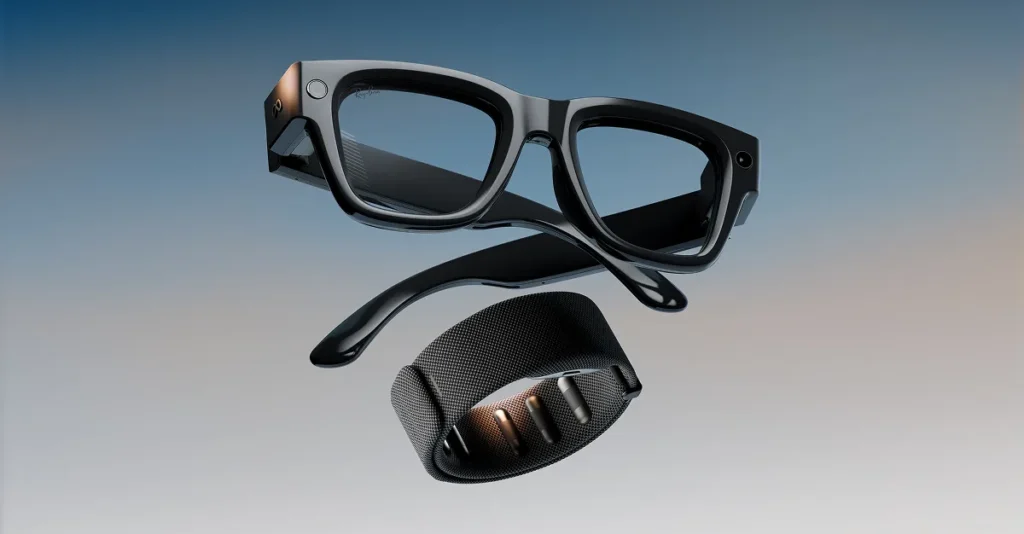
These glasses don’t just sit on your face — they bring the digital world right into your vision. And with Meta’s new Neural Wrist Band, you can literally control your digital life using nothing but tiny hand movements.
I’ve been testing them for a week, and I can confidently say: this feels like the future.
🌍 The Launch Event
Meta officially launched the Ray-Ban Display Smart Glasses in September 2025, after a year of buzz and leaks.
Unlike previous versions that were mostly for recording or music, this model adds something revolutionary — a built-in micro display inside one lens.
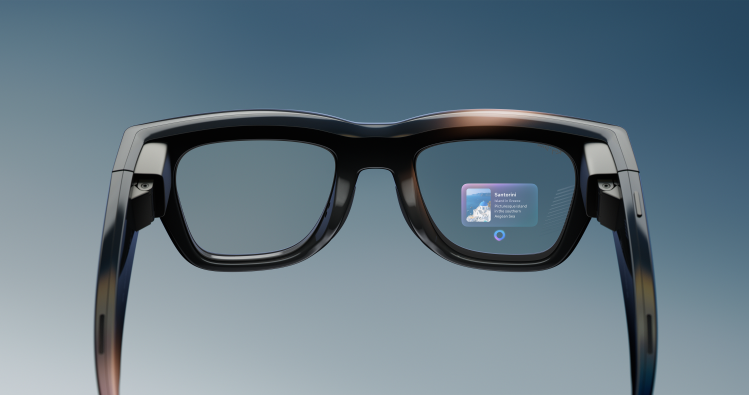
The glasses come in Meta’s familiar stylish Ray-Ban frames — but inside, there’s now a transparent screen that projects notifications, navigation, and even AI prompts directly into your line of sight.
The launch event made one thing clear: Meta wants to end the smartphone era.
Mark Zuckerberg even said during the reveal,
“We believe this is the beginning of a new chapter — where your world becomes your screen.”
Big words — but after using them, I can’t deny how close that statement feels to reality.
👓 Design: Normal Look, Superpowers Hidden Inside
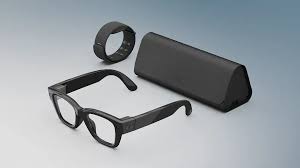
If you’ve seen Ray-Ban’s classic Wayfarer or Headliner designs — that’s exactly what these look like.
There’s no bulky frame, no weird lens shape, and no sign that you’re wearing futuristic tech.
The glasses are slightly thicker than normal, but Meta and Ray-Ban did a great job hiding all the components inside — from cameras to display modules to touch sensors.
They come in three colors: Matte Black, Shiny Caramel, and a limited Ice Blue Edition.
You can also order them with prescription lenses.
And the best part? They feel lightweight — only 50 grams — making them easy to wear all day long.
These don’t scream “tech gadget”; they whisper it — and that’s what makes them so wearable.
⚙️ The Magic Inside — Display, AI & Neural Control
Let’s break down what makes this device so different.
🪶 1. Built-In Micro Display
One of the lenses now has a 600×600 resolution micro display that shows information just below your line of sight — notifications, navigation arrows, incoming calls, or even weather updates.
It’s not an augmented reality headset like Apple Vision Pro — it’s more like a minimal, always-available assistant in your view.
🤖 2. Meta AI Integration
The glasses are powered by Meta AI (Llama 3), which you can activate simply by saying “Hey Meta” or with a small wrist movement using the neural band.
You can ask it questions, translate text, summarize things you’re seeing, or even get step-by-step directions.
Example: you can look at a restaurant and ask, “Hey Meta, is this place open now?” and the info appears instantly on your lens.
💪 3. Neural Wrist Band — Next-Level Control
This is the real innovation. The Neural Wrist Band reads your muscle signals using electromyography (EMG) sensors.
That means the band detects small electrical signals from your fingers — so you can control your glasses without touching them.
You can:
- Snap photos with a finger flick
- Scroll menus by moving your thumb
- Accept calls with a tap
- Control volume or playback using gestures
It’s fast, natural, and silent — no awkward voice commands in public.
📸 Camera & Audio: Hands-Free, POV Style
The glasses have a 12MP ultra-wide camera and five-mic array built into the frame.
You can capture videos, take photos, and even stream live directly to Facebook or Instagram.
Video quality is surprisingly sharp, especially considering the tiny lens.
Audio, on the other hand, is open-ear — meaning you can hear music or calls clearly, while still staying aware of your surroundings.
I tested them while walking in a crowded street — I could hear my playlist perfectly, yet still notice cars and people around me.
That’s something regular earbuds can’t match.
🔋 Battery Life & Charging
Battery life has improved a lot compared to the previous Ray-Ban Meta model.
You get around 5 hours of active use, and the charging case (which looks like a regular Ray-Ban case) adds up to 25 more hours.
Charging is done via USB-C, and a quick 10-minute top-up gives you about 1.5 hours of use — perfect for creators or travelers.
🧠 Using Them Daily — A Week Later
So, what’s it like after a week of real-world use?
It’s surreal at first — but soon becomes second nature.
I stopped pulling out my phone for small things like checking time, weather, or messages.
When walking, I could see small arrows floating in my vision, guiding me like an invisible map.
When a call came in, I just tapped my wrist slightly — and it answered.
Even replying to messages became easier. I said “Hey Meta, reply ‘on my way’,” and it did — instantly.
This is how technology should feel: invisible yet powerful.
💡 Key Features Summary
| Feature | Description |
|---|---|
| Display | 600×600 Micro OLED lens display |
| Camera | 12MP ultra-wide, 1080p 60fps video |
| Audio | 5-mic array + open-ear speakers |
| Connectivity | Bluetooth 5.3 + Wi-Fi |
| AI | Meta Llama 3 assistant |
| Control | Neural Wrist Band (EMG gestures) |
| Battery | 5 hrs (25 hrs with case) |
| Price | Starting at $549 USD |
| Colors | Matte Black, Caramel, Ice Blue |
| Launch Date | September 2025 |
For more expert insights, read the full hands-on coverage by The Verge
💬 Pros That Stand Out
✅ Looks like normal sunglasses — not “tech gear.”
✅ Real, usable display for daily tasks.
✅ Neural wrist band is futuristic and fun.
✅ Great for creators — POV shots & AI captions.
✅ Decent battery and quick charging.
✅ Feels smooth, responsive, and intuitive.
⚠️ Cons You Should Know
❌ Still limited field of view (display only one eye).
❌ Not ideal for bright sunlight — reflections can reduce clarity.
❌ Expensive for casual users.
❌ Still needs your phone nearby for full internet use.
❌ Privacy concerns — cameras may make people uncomfortable.
But honestly, considering this is just Gen 1 of display tech, Meta has nailed the foundation.
🔮 Will These Glasses Replace Smartphones in 5 Years?
This is the question everyone’s asking.
And my answer is: Yes — if Meta keeps improving like this.
Think about it.
- You can already read messages and notifications through your lens.
- You can reply using voice or gestures.
- You can record, call, navigate, listen to music, and use AI — all without touching a phone.
If Meta adds a full browser and standalone connectivity (like eSIM or cloud sync), smartphones could genuinely become unnecessary.
It might sound crazy, but remember how people laughed at the first iPhone?
Now, we might be witnessing the birth of the next tech era — the “smart vision” revolution.
Mark Zuckerberg even hinted at it:
“In five years, you’ll look back and wonder why you ever carried a screen in your pocket.”
Maybe he’s right.
You can also check out the complete lineup atRay-Ban’s official website.
📦 Availability & Price
The Ray-Ban Display Smart Glasses are now available in the US, UK, Canada, and selected European countries.
They start at $549 USD, with prescription lenses adding around $80–$100 more.
The Neural Wrist Band is sold separately for $149, but early buyers can get both in a launch bundle for $649.
Pre-orders in Asia, including India and Pakistan, are expected by December 2025.
🏁 Final Verdict: The Future Is On Your Face
After using them, I can confidently say:
These are not a gimmick — they’re a glimpse of what’s coming.
Meta’s Ray-Ban Display Smart Glasses finally make wearable tech feel normal.
The Neural Band pushes it even further — showing us how we might soon control our world without touching a single screen.
They’re stylish, smart, and surprisingly practical.
And if Meta delivers on its next few updates, we might actually see the end of smartphones in the next few years.
It’s not science fiction anymore — the future has just gone wearable.
🔗 For official details and product specs, visit Meta’s official page
🔗 Before You Leave…
If you want to see how current flagship phones compare to this new wearable era, check out my post on the Samsung Galaxy S26 Ultra — it’s the perfect look at where phones stand before glasses take over.
👉 Read here: Samsung Galaxy S26 Ultra Full Review
If you want to explore how Samsung’s last flagship compared to others, don’t miss my detailed post on Samsung Galaxy S25 Ultra vs Xiaomi 17 Pro Max.
Pingback: Samsung Galaxy XR – Future of Mixed Reality Is Here (Better Than Vision Pro?) - alfawaz.tech
This is great competitive of Galaxy xr and vision pro