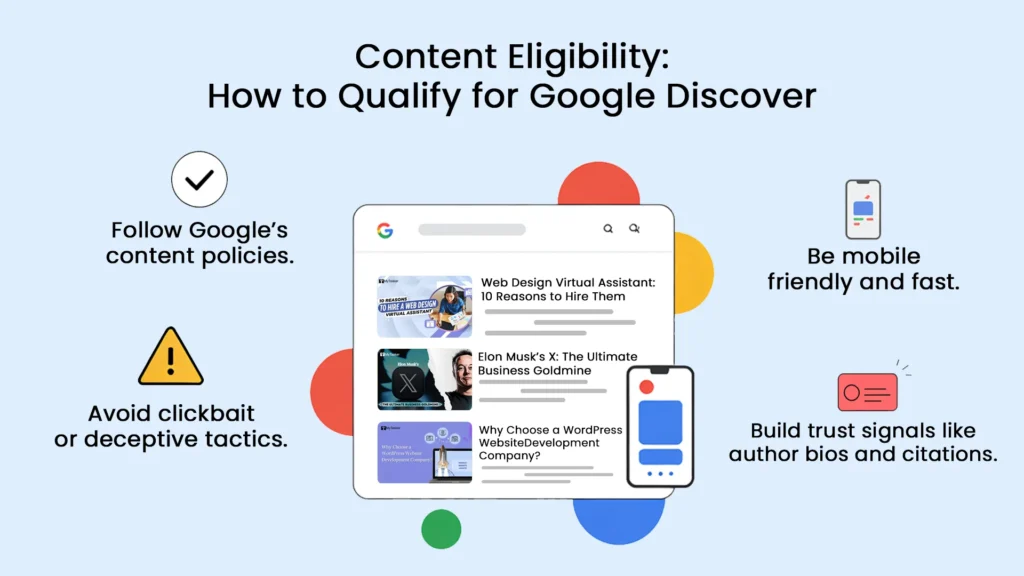
If you’ve ever checked your Google Search Console and felt that sinking feeling — low impressions, almost no clicks, and zero momentum — trust me, you’re not alone. I’ve been there.
Just a few weeks ago, one of my blog posts was barely getting 30–40 impressions a day. No magic SEO trick, no backlinks, no keyword stuffing. Then something strange happened.
I woke up, opened Search Console, and saw a traffic spike I honestly didn’t expect.
👉 1,100+ views from Google Discover.
No warning. No email. Just traffic.
This article is not theory. It’s not copied from Google docs. It’s exactly what I observed, tested, and learned when Google Discover suddenly pushed my blog — and what you can realistically do to increase your own chances in 2026.
Let’s break it down.
If your Discover traffic disappears after a few hours, your YouTube Shorts might be facing the same issue — here’s why
Why Your YouTube Shorts Views Are Dying in 2026 (And How to Fix It)
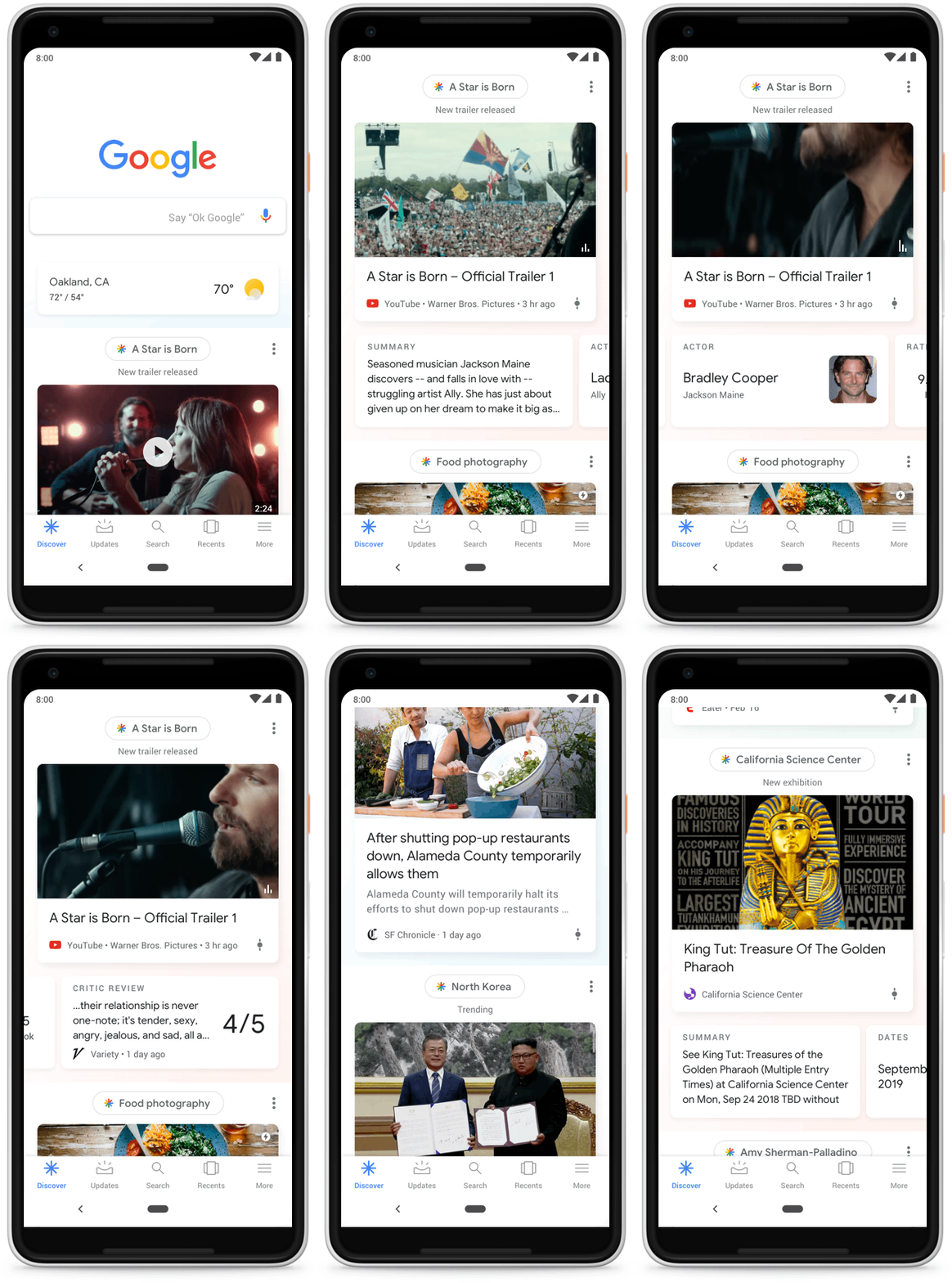
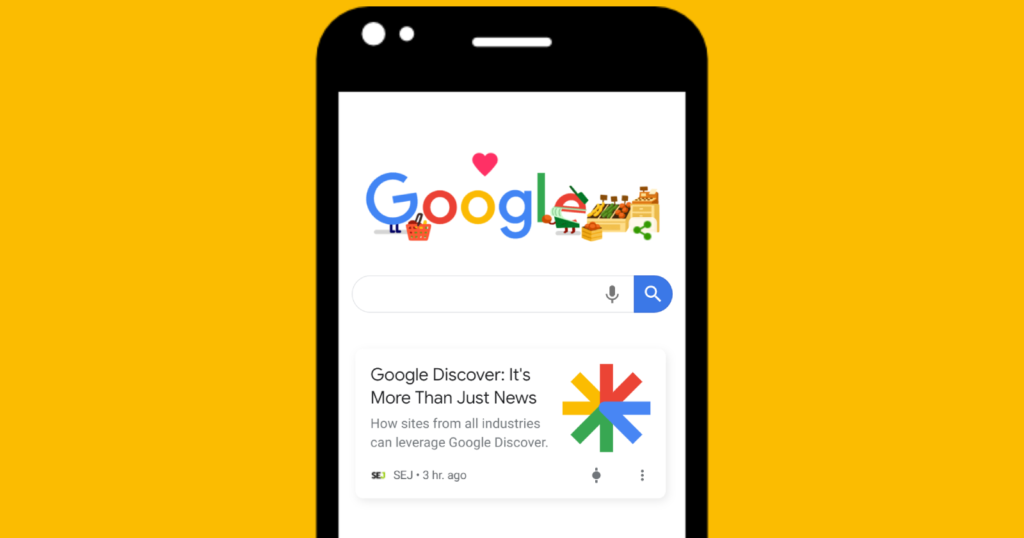
What Is Google Discover (And Why It’s Different From SEO)
Before we go further, you need to understand one thing clearly:
Google Discover is NOT search.
People don’t type keywords there. They scroll. Just like Instagram, Facebook, or TikTok.
Discover shows content based on:
- User interests
- Past behavior
- Engagement signals
- Visual appeal
This means traditional SEO rules only partially apply. You can rank #1 on Google Search and still never appear on Discover.
Discover works on attention, not keywords.
The Day My Blog Got Pushed by Discover
Here’s what actually happened.
I published a post that wasn’t overly optimized for keywords. It was written like a story, not a guide. The headline was emotional. The image was bold. The angle was opinionated.
For the first 24 hours:
- Search traffic: almost nothing
- Impressions: very low
On day two:
- Discover impressions started appearing
- CTR was higher than my average
- Session time increased
On day three:
- Discover traffic exploded
That’s when I started analyzing what signals changed.
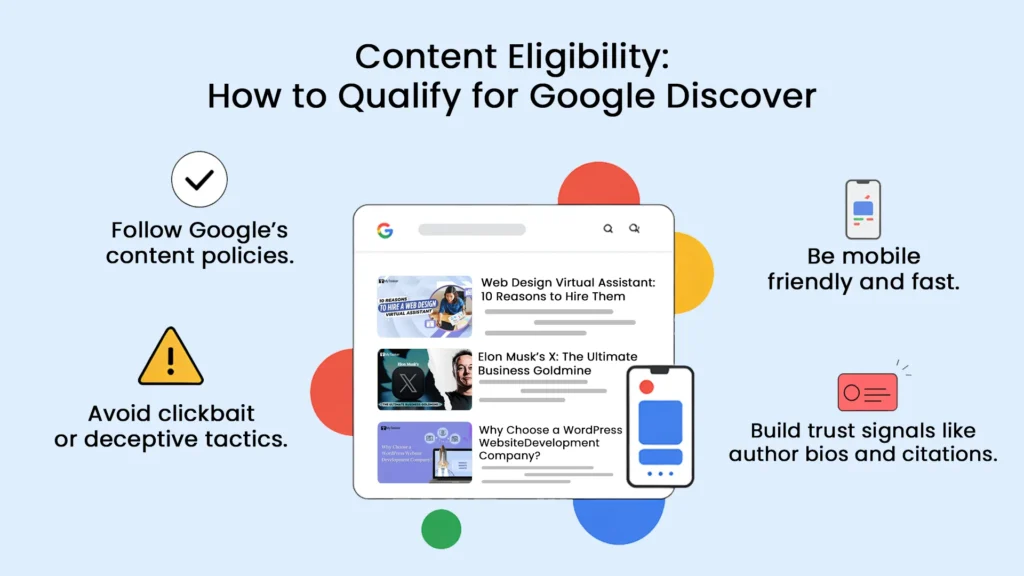
Signal #1: The Headline Was Emotional, Not Keyword-Stuffed
This is the biggest mistake most bloggers make.
They write titles like:
“How to Increase Blog Traffic in 2026”
That’s fine for search.
It’s boring for Discover.
The post that got pushed had a headline built on:
- Curiosity
- Emotion
- First-person experience
Instead of explaining what, it teased why and how.
Discover-Friendly Headline Formula
Use at least one:
- Why
- Suddenly
- The Truth About
- Google Is Ignoring…
- This Is Why…
Example:
Google Discover Suddenly Pushed My Blog – These 5 Signals Made the Difference
No keyword stuffing.
Still clear.
Still relevant.
Signal #2: The Feature Image Did Most of the Work
On Discover, your image sells the click.
People don’t read titles first — they see images first.
What Worked for Me
- Image size: 1200×675
- High contrast
- Clean background
- 2–3 bold words only
- One clear emotion
I avoided:
- Stock photos with no meaning
- Too much text
- Blurry or generic visuals
Image Text Example:
- “DISCOVER PUSH”
- “TRAFFIC SPIKE”
- “REAL SIGNALS”
Important:
The image matched the headline emotion. No mismatch.
This alone can double your CTR.
Signal #3: The Content Was Written Like a Human, Not an SEO Bot
This part matters more than most people realize.
Google Discover heavily relies on engagement signals:
- Time on page
- Scroll depth
- Bounce rate
If your content feels robotic, people leave.
What I Changed
- Short paragraphs
- Personal experiences
- Honest language
- No unnecessary fluff
- Opinions, not just facts
Instead of:
“In this article, we will discuss…”
I wrote:
“Here’s what actually worked — and what didn’t.”
Discover rewards content that feels real, not perfect.
Signal #4: The Topic Was Fresh and Relevant (Not Evergreen Only)
Discover prefers:
- Recent events
- Trends
- Platform changes
- Industry shifts
My post wasn’t a timeless guide. It was time-based.
I mentioned:
- 2026
- Algorithm changes
- Current blogging realities
Even if the topic is old, the angle must feel new.
Example:
- ❌ “Blogging Tips”
- ✅ “Why Blogging Feels Harder in 2026 (And What Actually Works Now)”
Signal #5: Early Engagement Signals Helped
Here’s something many people ignore.
After publishing, I:
- Requested indexing in Search Console
- Shared the post on Twitter (X)
- Posted it on my Facebook page
- Used the same image everywhere
This creates consistency and early interaction signals.
Even small engagement helps Discover decide:
“Should we test this post with more users?”
Publishing Time Also Matters (More Than You Think)
For me, these times worked best (Pakistan time):
- 9:00 – 11:00 AM
- 7:00 – 10:00 PM
Avoid publishing at:
- Late night (1–4 AM)
- Random off-hours
Discover tests content in short windows. Timing matters.
Common Mistakes That Kill Discover Chances
Avoid these if you want Discover traffic:
- Keyword-stuffed headlines
- Low-quality stock images
- AI-written content with no editing
- Over-optimization
- Clickbait that doesn’t deliver value
Discover may test your post once — if users bounce, it won’t come back.
The Truth About “100% Guarantee” Discover Traffic
Let’s be honest.
There is no 100% guarantee.
But there is a system that:
- Maximizes your chances
- Helps Google test your content
- Improves repeat Discover appearances
Once one post performs well, Google starts trusting your site more.
Discover success is often compound-based, not one-time luck.
How to Increase Your Future Discover Chances
Here’s a simple checklist you can reuse:
- Emotional headline
- High-quality feature image
- Story-based content
- Fresh angle
- Strong opening
- Clear takeaway
- Consistent branding
Do this repeatedly — Discover notices patterns.
Final Thoughts
Google Discover doesn’t reward perfection.
It rewards:
- Authenticity
- Relevance
- Engagement
- Visual clarity
If your blog is new, don’t chase backlinks first.
Chase attention.
That one Discover push can:
- Validate your content
- Increase authority
- Kickstart organic growth
It did for me.
And yes — it can happen for you too.
Купить пластиковые окна на заказ в Москве — это отличный способ улучшить энергоэффективность вашего дома и повысить его комфорт.
Как правило, предлагаются различные возможности по оплате и установке.
Pingback: Why Google Is Quietly Ignoring SEO in 2026 - alfawaz.tech